
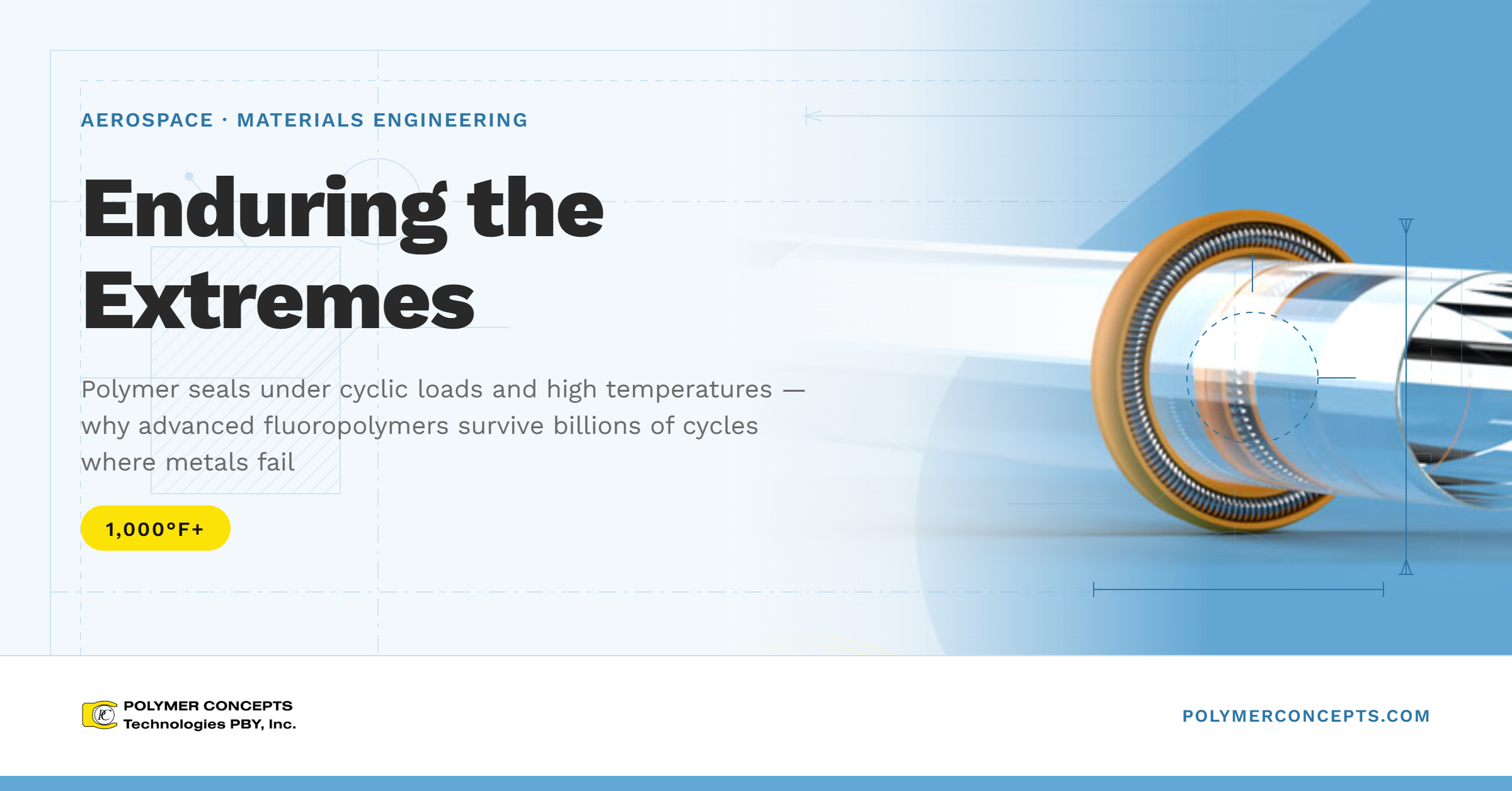
The aerospace industry presents a frontier of remarkable technological feats, with components designed to endure both intense forces and extreme environmental conditions. From the extreme vacuum of high-altitude flight to the mechanical stresses of repetitive engine cycles, aerospace components endure extraordinary usage. Yet the challenges these components face are as formidable as their innovations. Advanced materials, such as polymer and fluoropolymer seals, empower these systems to endure longer, perform better, and withstand the extremes.
The Unyielding Demands on Aerospace Components
Aerospace components operate in some of the most demanding conditions imaginable. These parts must endure extreme high and low temperatures, sudden thermal variations, mechanical cyclic loads, and sustained operational stresses. The highly complex environments of jet engines, for example, expose materials to uninterrupted heat loads, harsh chemicals, and fast-switching mechanical forces.
Every flight presents repeating cycles of takeoff, cruise, and landing, subjecting components to immense wear. These stressors compound over countless flight hours, pushing materials far beyond the endurance limits seen in typical industrial applications.
The Role of Very High Cycle Fatigue (VHCF)
This sustained wear introduces a critical challenge faced by aerospace engineers: Very High Cycle Fatigue (VHCF). Also known as gigacycle fatigue, VHCF occurs when materials fail not after thousands or millions of cycles, but billions. For example, a jet engine blade spinning at high speeds during hours of flight. Over time, its exposure to repetitive stress leads to fatigue-induced cracks and, potentially, catastrophic failure if not addressed.
Aerospace manufacturers increasingly design equipment for ultra-long-life applications, often demanding performance that exceeds 10⁽ or even 10¹⁰ cycles without failure. These designs are especially critical for fatigue-sensitive parts like turbine blades, rotating shafts, and seals within jet engines.
Such requirements push materials further, especially as aerospace progresses toward higher speeds, tougher environments, and optimized fuel efficiencies.
Elevated Temperatures and Cyclic Loading: A Recipe for Component Fatigue
The impact of high temperatures on fatigue is twofold. First, elevated temperatures cause changes in material properties, such as softening or oxidation, which weakens a component's durability. Additionally, temperature fluctuations from cooling and reheating create thermal stresses. Combined with cyclical mechanical loads, this can accelerate material degradation.
For example:
- Jet engine rotors endure blistering temperatures above 1,000°F while spinning thousands of times a minute, with sudden cooling during power modulation.
- Hydraulic seals function under simultaneous heat exposure and high-pressure cyclic forces, risking leaks and failure if the material can't maintain its properties.
Such conditions hasten the wear and tear of equipment, hurting long-term reliability, efficiency, and ultimately, safety. These are exactly the kinds of demands addressed by seals engineered for high-pressure, high-temperature applications.
The Critical Role of Polymer Seals
Within these grueling conditions, seals are the unsung heroes. Without them, systems would be unmanageably prone to environmental leaks, pressure losses, or failed motion mechanisms. Polymers, used in these components, are exceptionally suited to act as barriers against heat, pressure, and stress.
Seals prevent leaks within fuel, hydraulic, and cooling systems. They act as pressure buffers, ensuring smooth operation even in harsh conditions. A polymer seal under heat and cycling must:
- Resist elevated temperatures without breaking down.
- Remain elastic and adaptable through repetitive compression.
- Minimize leakage even when thermal expansion occurs due to soaring temperatures.
The Power of Advanced Polymer Materials
Not all materials are created equal, especially in industries like aerospace, where failure is never an option. Advanced polymers and fluoropolymers are engineered to survive and thrive in these demanding applications.
Why Polymers?
Polymers, by design, offer greater flexibility and thermal resistance compared to traditional materials like metals. They are lighter, more corrosion-resistant, and better suited for harsh chemical and thermal environments.
What Makes Advanced Materials Stand Out?
Polymers used in aerospace seals are meticulously crafted to provide:
- Resistance to Thermal Degradation: The ability to maintain structural integrity even with fluctuating high and low temperatures.
- Durability Under Cyclic Loads: These materials withstand millions or billions of cycles without failure, preventing cracks or deformities.
- Wide Operational Temperature Ranges: They remain effective across extreme parameters, ensuring functionality on both ends of the temperature spectrum.
- Chemical and Oxidation Resistance: Advanced materials handle exposure to fuels, hydraulic fluids, and extreme pressures without surface or material degradation.
Fluoropolymers, in particular, excel in these scenarios due to their exceptional heat tolerance and ability to handle dynamic thermal and mechanical stresses simultaneously. When paired with spring-energized designs, they deliver reliable sealing force across the full temperature range.
Why Polymer Concepts Technologies?
For mission-critical applications, compromise is not an option. At Polymer Concepts Technologies, we specialize in designing, engineering, and manufacturing advanced polymer and fluoropolymer seals that push the boundaries of performance. Whether for aerospace, medical equipment, or specialized industrial uses, our solutions focus on:
- Providing state-of-the-art sealing innovations tailored to high-stress environments.
- Shortening the design-to-delivery process without sacrificing quality.
- Engineering materials purpose-built for ultra-long lifespan and demanding tolerances.
With experience across aerospace, liquid chromatography pumps, valves, turbines, and beyond, our team understands the challenges of extreme environments and delivers solutions that endure.
Are your current components meeting the demands of today's extreme applications? Polymer Concepts Technologies delivers sealing solutions designed to thrive where others fail. Contact us today to explore how we can enhance the durability, performance, and reliability of your mission-critical systems. Together, we can conquer the extremes.
Disclaimer: The information in this article is provided for general educational purposes and to promote overall awareness. It is not intended as engineering, legal, or other professional advice, and should not be used in place of consultation with qualified professionals familiar with your specific application and conditions. Product validation must be performed to confirm suitability for the intended application and operating conditions. This content should not be considered exhaustive.